# IP Addresses and Domains
### IP Addresses
One of the ways an adversary can make it challenging to successfully carry out IP blocking is by using Fast Flux.
According to [Akamai](https://www.akamai.com/blog/security/digging-deeper-an-in-depth-analysis-of-a-fast-flux-network), Fast Flux is a DNS technique used by botnets to hide phishing, web proxying, malware delivery, and malware communication activities behind compromised hosts acting as proxies. The purpose of using the Fast Flux network is to make the communication between malware and its command and control server (C\&C) challenging to be discovered by security professionals.
So, the primary concept of a Fast Flux network is having multiple IP addresses associated with a domain name, which is constantly changing. Palo Alto created a great fictional scenario to explain Fast Flux: ["](https://unit42.paloaltonetworks.com/fast-flux-101/)[Fast Flux 101: How Cybercriminals Improve the Resilience of Their Infrastructure to Evade Detection and Law Enforcement Takedowns"](https://unit42.paloaltonetworks.com/fast-flux-101/)
#### Workflow
* **Start with RDAP**: Confirm netrange, org, ASN, and abuse contacts.
* **Add ASN Context**: Check bgpview\.io or ipinfo.io for ASN details and role.
* **Check Geolocation**: Capture country from at least two sources. Record mismatches.
* **Look for rDNS Patterns**: Reverse DNS can hint at hosting type (e.g., \*\[.]btcentralplus\[.]com = UK broadband). Do not base decisions solely on rDNS.
* **Consult Internal Logs**: Has this IP appeared in the last 30 days? If yes, in what context?
* **Classify Role**: Hosting, residential, CDN, or cloud. Record reasoning.
* **Plan Outreach**: If confirmed malicious and in a cooperative ASN, prepare a report for the abuse contact.
#### IP address location tools
{% embed url="" %}
{% embed url="" %}
#### IP Reputation Check
{% embed url="" %}
### IP Ownership
The **Registration Data Access Protocol (RDAP)** is the authoritative source for IP ownership. Unlike commercial GeoIP services or provider marketing pages, RDAP data is maintained by Regional Internet Registries (RIRs) such as RIPE NCC, ARIN, and APNIC. It tells us precisely who has been provided with the netblock.
From RDAP, we obtain:
* **NetRange**: The range of addresses delegated.
* **Organisation**: The registered holder (e.g., Amazon, Vodafone, TryHackMe).
* **Remarks**: Often include whether the block is used for hosting, broadband, or mobile.
* **Abuse Contact**: The official mailbox for incident reporting.
{% embed url="" %}
{% embed url="" %}
### If IP is VPN on tor node
IP2Proxy is another vital resource for labelling VPN, proxy, and Tor exit nodes. These are legitimate shared egress points, which can weaken attribution.
{% embed url="" %}
### Domain Names
Domain Names can be a little more of a pain for the attacker to change as they would most likely need to purchase the domain, register it and modify DNS records. Unfortunately for defenders, many DNS providers have loose standards and provide APIs to make it even easier for the attacker to change the domain.
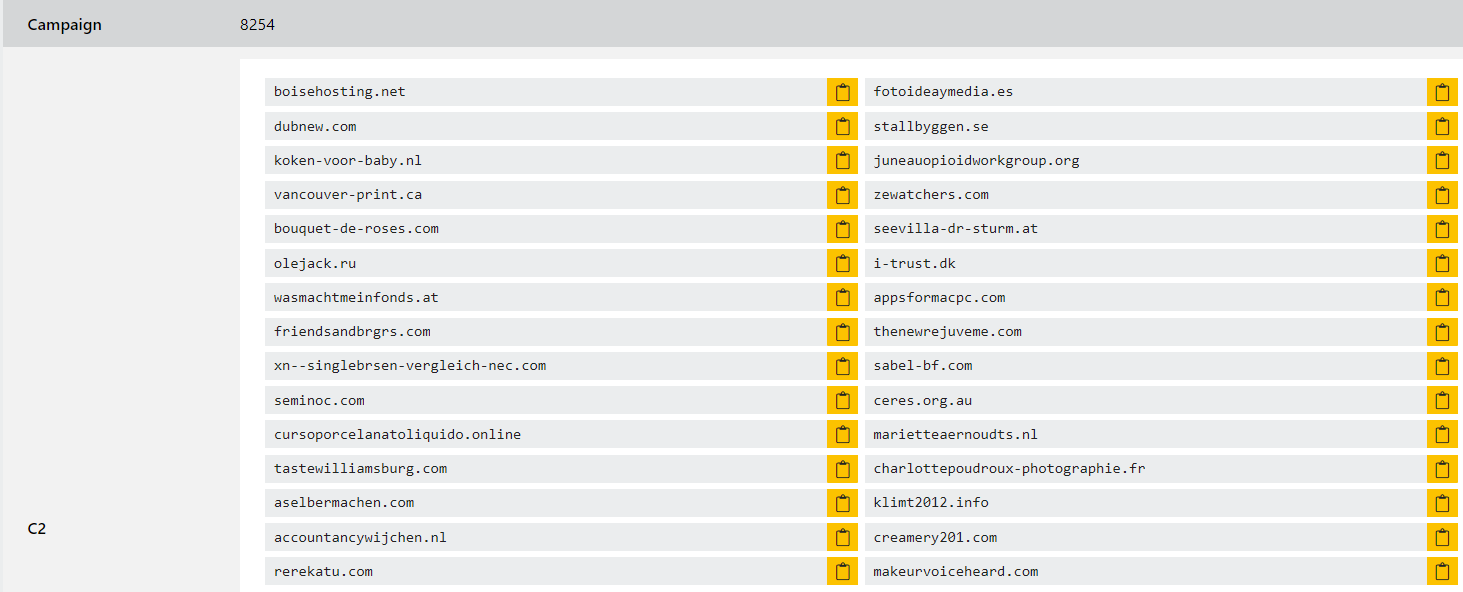
**Malicious** Sodinokibi **C2 ( Command and Control Infrastructure) domains:**
#### URL Reputation Check
{% embed url="" %}
{% embed url="" %}
{% embed url="" %}
#### URL Screenshot
{% embed url="" %}
{% embed url="" %}
#### Punycode attack
"Punycode is a way of converting words that cannot be written in ASCII, into a Unicode ASCII encoding."
What you see in the URL is `adıdas.de` which has the Punycode of `http://xn--addas-o4a.de/`
Internet Explorer, Google Chrome, Microsoft Edge, and Apple Safari are now pretty good at translating the obfuscated characters into the full Punycode domain name.
To detect malicious domains, proxy logs or web server logs can be used.
#### Shortners
Attackers usually hide the malicious domains under URL shorteners. A URL Shortener is a tool that creates a short and unique URL that will redirect to the specific website specified during the initial step of setting up the URL Shortener link. The attackers normally use the following URL-shortening services to generate malicious links:
* bit.ly
* goo.gl
* ow\.ly
* s.id
* smarturl.it
* tiny.pl
* tinyurl.com
* x.co
You can see the actual website the shortened link is redirecting you to by appending "+" to it (see the examples below). Type the shortened URL in the address bar of the web browser and add the above characters to see the redirect URL.
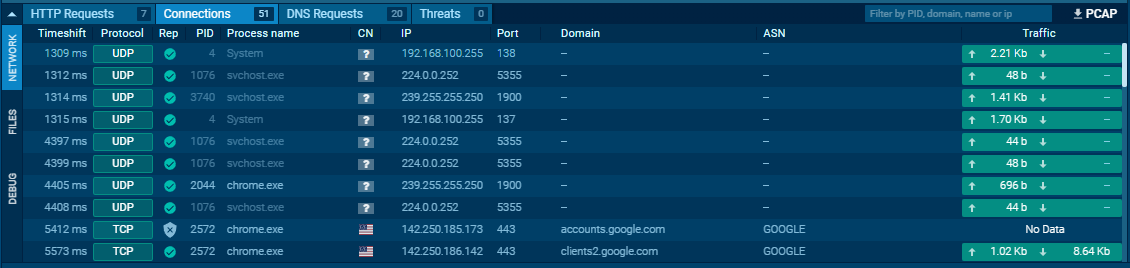
#### Any.run Sample